
Recall
NHTSA evaluates petition on Ford E-350, F-59, F-750 7.3L engines
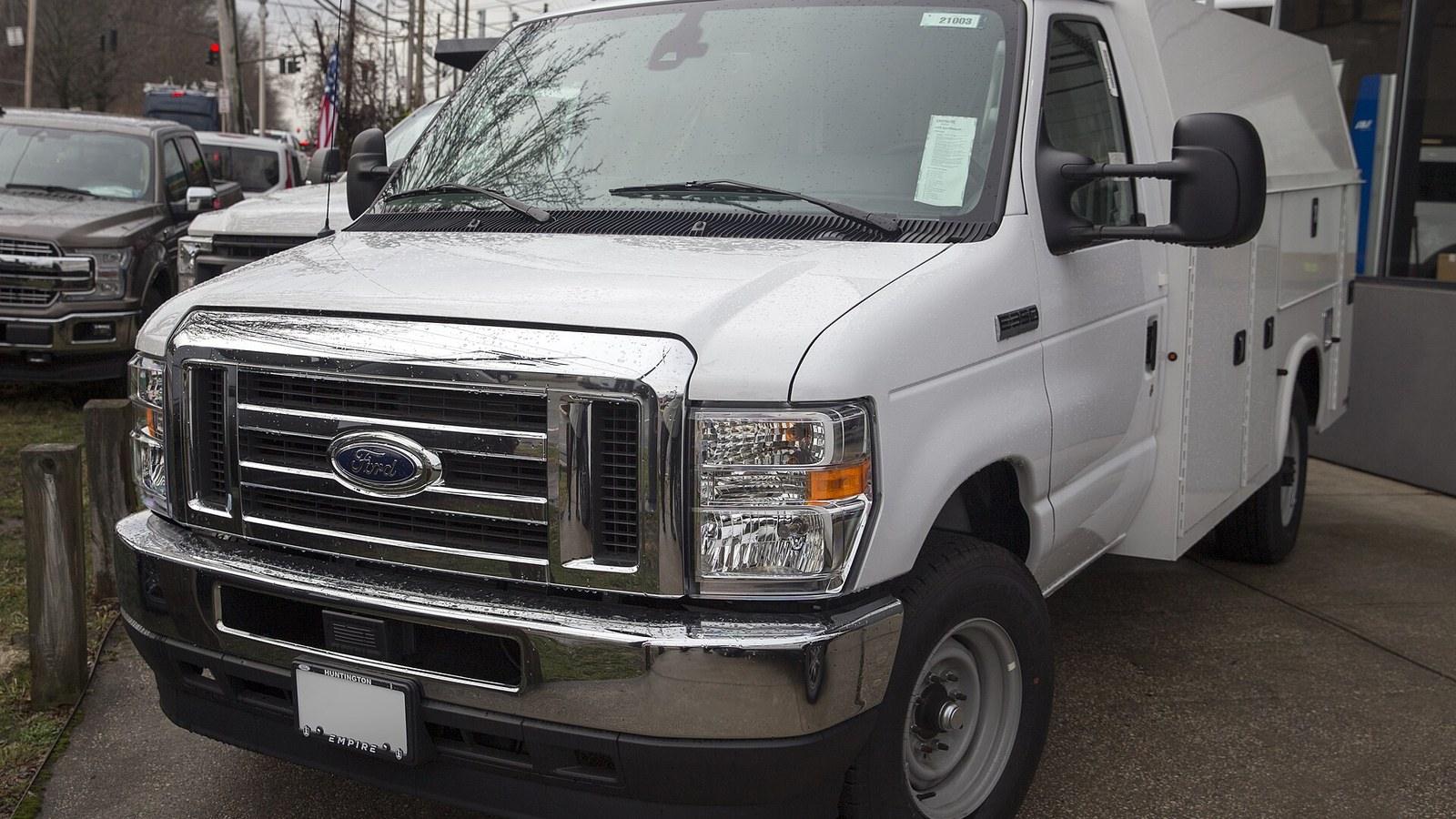
NHTSA's Office of Defects Investigation will determine whether to grant or deny a petition alleging camshaft and lifter failures in 7.3L gasoline engines in 2021-2022 Ford E-350 and 2021 Ford F-59 and F-750 vehicles.
Checked against 2 sources (2 primary)Records from nhtsa.gov · How we report

Published · Updated · 3 min read
Key numbers
Units potentially affected as filed with NHTSA
- Model years
- 2021–2022 E-350 and All listed products combined
- 2021 F-59 and F-750
Jump to
Is your car affected?
For open (unrepaired) recalls on your car, enter its 17-character VIN in NHTSA's lookup by VIN.
Recall at a glance
- Investigation
- Defect Petition DP26011 [1]
- Opened
- Oct. 23, 2026 [1]
- Petition received by NHTSA's Office of Defects Investigation
- June 13, 2026 [1]
- Vehicles named in NHTSA's investigation file
- 2021-2022 Ford E-350; 2021 Ford F-59; 2021 Ford F-750 [1]
- Engine (petition)
- Ford 7.3L gasoline engine [1]
- Subject (NHTSA's wording)
- Camshaft and Lifter Failure in Ford 7.3L Gasoline Engines [1]
- Risk alleged by the petitioner
- Catastrophic engine failure and sudden loss of motive power while driving at highway speeds with little to no warning [1]
- Estimated population (all listed vehicles combined)
- 54,787 (NHTSA's estimate in its opening resume; no per-model split) [2]
- Recall campaign number
- None listed in NHTSA's record [1]
- Purpose
- To evaluate the issue and determine whether to grant or deny the petition [1]
- Petition record
- ODI number 11764421 at NHTSA.gov [1]
| Make | Model | Model years | Units |
|---|---|---|---|
| Ford | E-350 | 2021-2022 | Not stated |
| Ford | F-59 | 2021 | Not stated |
| Ford | F-750 | 2021 | Not stated |
| Ford | All listed products combined (2021-2022 E-350, 2021 F-59, 2021 F-750): NHTSA's estimated population, no per-model split; not a recall and not a count of failed vehicles | 2021-2022 | 54,787 |
What to do
The petition can be reviewed at NHTSA.gov under ODI number 11764421.
NHTSA's record lists no closing date for DP26011.
If you are shopping for a used 2021-2022 Ford E-350 or a 2021 Ford F-59 or F-750, run its VIN through a recall check before you buy.

What happened
The National Highway Traffic Safety Administration (NHTSA) opened Defect Petition DP26011 on Oct. 23, 2026. NHTSA's subject line for it is "Camshaft and Lifter Failure in Ford 7.3L Gasoline Engines."
NHTSA's opening resume for DP26011 describes the problem this way: "Engine failure may result in a loss of motive power, increasing the risk of a crash."
NHTSA's Office of Defects Investigation (ODI) received the petition on June 13, 2026. It requests an investigation into camshaft and lifter failures in Ford 7.3L gasoline engines used in 2021-2022 Ford E-350 and 2021 Ford F-59 and F-750 vehicles.
The petitioner alleges that insufficient oil lubrication at low idle, about 6 psi, causes severe wear on lifter rollers and camshaft lobes. According to the petitioner, this leads to catastrophic engine failure and sudden loss of motive power while driving at highway speeds, with little to no warning.
The petition further alleges that Ford Motor Company was aware of the root cause and released a software calibration patch raising idle speed to about 1,000 RPM, but failed to initiate a public safety recall or notify vehicle owners.
These are the petitioner's allegations. ODI says the defect petition has been opened to evaluate the issue and determine whether to grant or deny the petition.
Is my car affected?
NHTSA's investigation file for DP26011 lists the 2021 and 2022 Ford E-350 and the 2021 Ford F-59 and F-750, with the engine as the component and Ford Motor Company as the manufacturer.
NHTSA's opening resume for DP26011 estimates the population at 54,787 for the 2021-2022 E-350, 2021 F-59 and 2021 F-750 combined, with no split by model. NHTSA's record lists no recall campaign number.
New NHTSA vehicle recalls: Recall tracker
This story was prepared with AI assistance and fact-checked by our AI review process against its sources, then reviewed by Paul Grice before publication. Our AI policy.
Sources
All 2 are primary sources, accessed 2026-11-09.